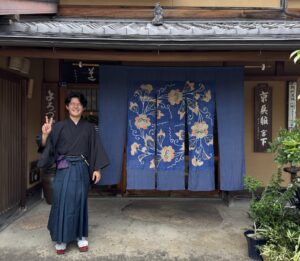
Hello, my name is Takuma Nakagawa from Denei.
In this note, I would like to leave behind some of my recent thoughts on a question I have been thinking about: what is the meaning of a tea ceremony today?
Why I Started Thinking About This Question
There are a few reasons why I came to this question.
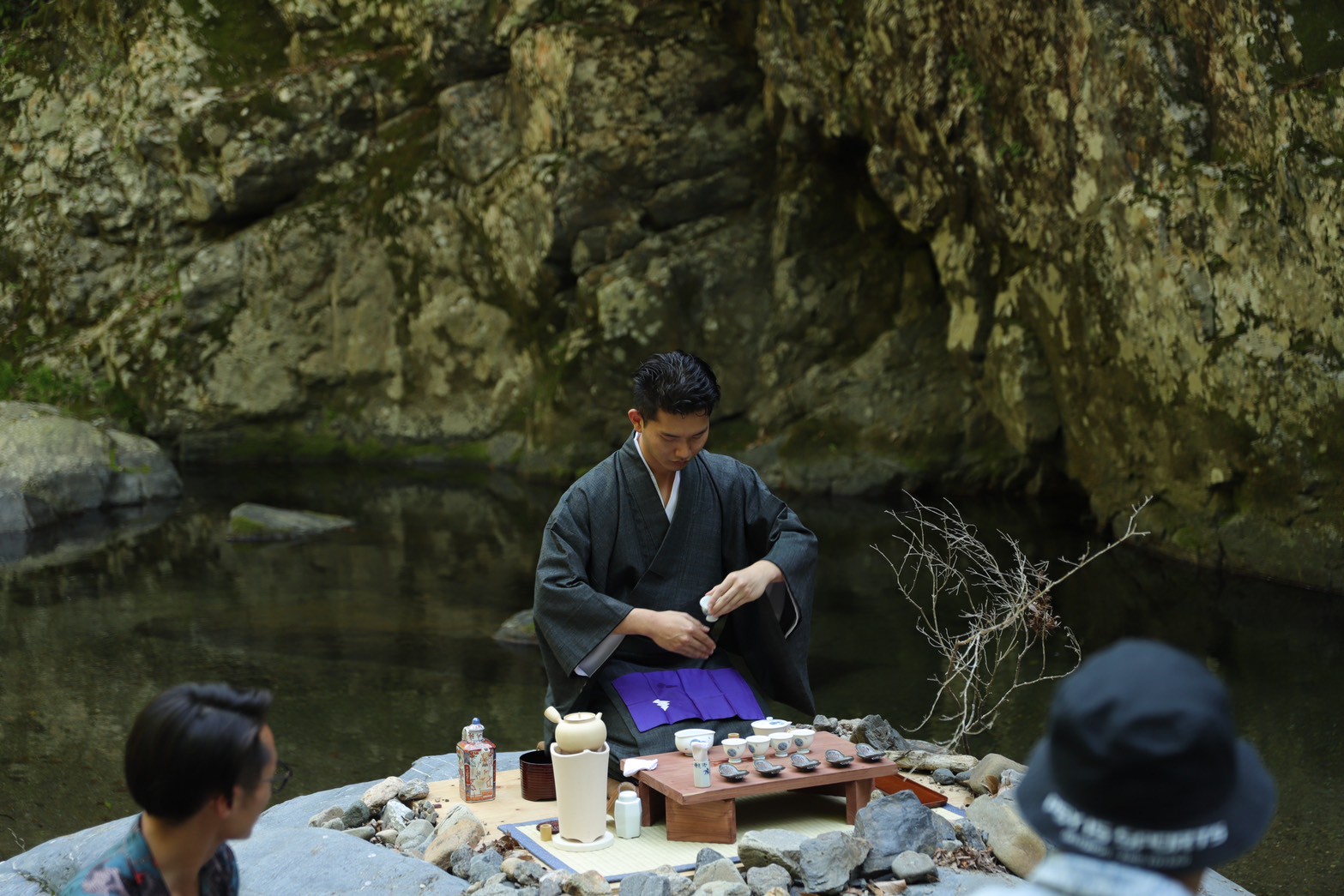
Through our tours, where guests experience a tea ceremony, some guests have asked us: “What is a tea ceremony for?” or “Why do people do this?”
Also, as I have been learning tea myself, I have often wondered: “Why am I doing this?” and “What am I actually learning?”
Of course, I still do not have a clear answer. I am still in the middle of searching for it. But little by little, I feel that the shape of the answer is starting to appear.
When I began thinking about this question, the first thing I wanted to think about was this: what was a tea ceremony for people in the past? And what kind of tea culture existed in Japan?
Tea Culture in Old Japan
In old tea ceremonies, guests were also expected to understand strict rules, manners, and unspoken agreements.
Because of this, I think a kind of shared rhythm could appear between the host and the guests. They could move together without explaining everything. A flow was created, and only then, the space of the tea ceremony could truly come alive.
It is also said that one of the biggest supporters of tea culture in Japan was the samurai class.
Their work was war. Their work was killing. I think they had to live while always being close to the question of life and death.
Such people took part in tea . Maybe, even if only for a short time, they could forget the harsh reality outside, enjoy the season, feel the passing of time, and enjoy conversation with the host and other guests.
And through that, they could return to reality again and focus on their work.
Maybe tea ceremonies were something like that.
Later, as time passed, the literati and cultural people of the time began to seek a freer way to enjoy tea. It is said that this search eventually led to the creation of sencha-do.
What Should Tea Culture Be Today?
Now, we come to the modern age.
Today, Japanese tea culture is also known by many people from overseas, and it has become a popular reason for travel.
But many people who join a tea ceremony today are doing it for the first time. So it is difficult to have the same kind of shared understanding that existed in the past.
It can become something people watch from the outside.
If that happens, I think it becomes difficult to feel the unity between the host and guests, the flow of the ceremony, and the feeling that time is simply passing.
Maybe that is why the question appears:
“What is the purpose of a tea ceremony?”
“Why are we doing this?”
If the host and guests become one with the space, maybe there is no need to ask such questions. You simply feel it. You feel good. And that feeling remains. There is no space for the question to enter.
After thinking this far, I feel that what matters most is this:
Through a tea ceremony, the host and guests come together, and people enjoy the feeling of time flowing.
In the modern world, we often think of time as something we must protect, manage, or measure. We think of time as the ticking of a clock.
But I feel that time is something much more mysterious.
Just as there are seasons in the world, just as a tree does not become large in one day, just as cherry blossoms do not bloom in winter, I feel that life also moves along with a certain flow of time.
Through my life, I want to ride that flow.
Maybe a tea ceremony is a place where people can feel something like this.
For that reason, I think there are many things we need to think about. Some things may need to change. Some things must not be lost.
I think I will continue asking this question for a long time.
For now, I will stop here.
If you ever join one of our tea ceremonies, I would be happy if you could share what you felt, what you thought, and any questions that came to you.
Thank you very much.
Denei Co., Ltd.
Takuma Nakagawa